Wednesday, December 2, 2020

Mr. Jones


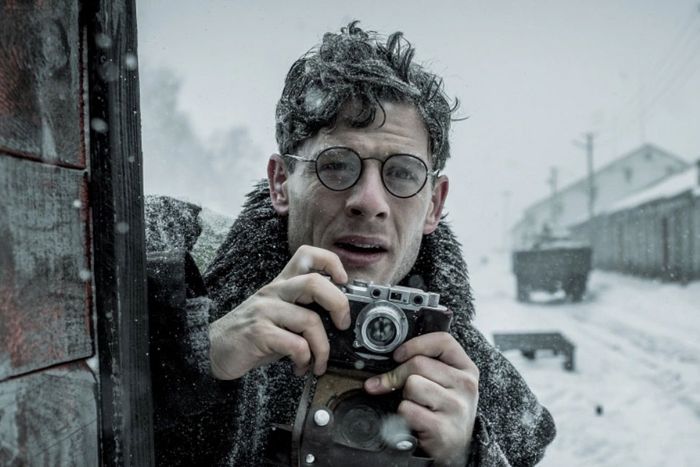
In Agnieszka Holland’s gripping historical drama, a British journalist and erstwhile diplomat travels to Stalin’s Soviet Union in the 1930s to find out just where all the country’s economic growth is coming from, and discovers one of the great crimes of the 20th century — the mass starvation of Ukrainians, a holocaust that killed millions and was largely covered up by the press at the time. What starts as a kind of staid period piece gradually dissolves into a harrowing nightmare with images of unspeakable brutality. Director Holland never quite gets the credit she deserves — she made several masterful films in her native Poland before fleeing communism in the 1980s. Her work since has been equally powerful, and Mr. Jones is a fine addition to her impressive body of work.

Babyteeth


A terminally ill teenage girl becomes besotted with a 20-something junkie in Shannon Murphy’s feature debut, which puts The Fault in Our Stars to shame with its razor-edged exploration of what it’s like to be voraciously falling in love for the first (and possibly last) time. Australian acting royalty Essie Davis and Ben Mendelsohn are very good as middle-class parents struggling to unclutch their pearls for the sake of their daughter’s happiness, but the film is really a showcase for up-and-comer Eliza Scanlen, late of Sharp Objects and Little Women, who’ll hopefully get to play a character in the full flush of health soon.

Miss Juneteenth


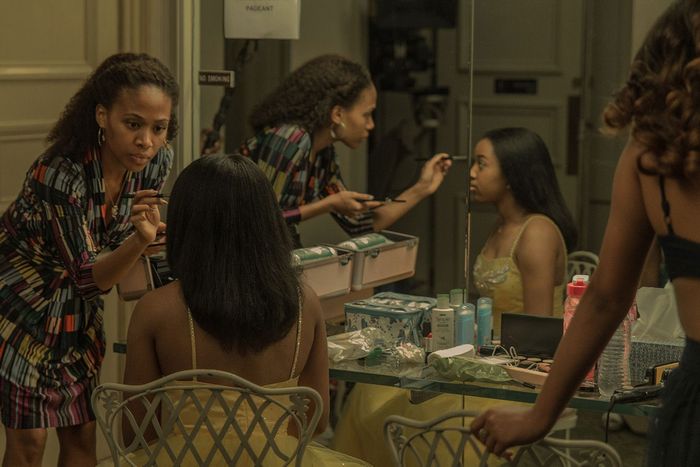
Miss Juneteenth is an evocative portrait of Black life in Forth Worth, Texas, seen through the lens of Turquoise Jones (Nicole Beharie), a single mother trying desperately to make ends meet as she encourages her teenage daughter to participate in a pageant that she won herself in her youth. In her feature debut, writer-director Channing Godfrey Peoples deftly charts the emotional bramble and inner yearnings of not just Turquoise and her daughter, but the family and loved ones that surround them in a way that makes no grand proclamations about Black identity, instead choosing to revel in the tender considerations of this minor-key film. Issues of class, alcoholism, personal failure, and secret wishes run through the film. With gentle cinematography shot through with amber light and an intelligently wrought script, Miss Juneteenth has many pleasures. But its crowning jewel is the performance by Beharie. She’s simply magnificent, burnishing the quietest moments with a striking complexity and empathy that has stayed with me in the weeks after seeing the film originally.

The Ghost of Peter Sellers


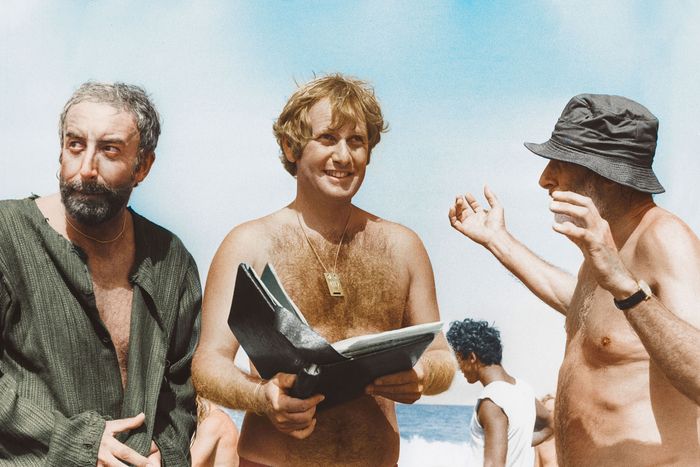
In the early 1970s, Peter Medak — a young director with a string of acclaimed films to his name — was approached by his friend Peter Sellers to make a pirate comedy called “Ghost in the Noonday Sun.” What ensued was one of the most catastrophic shoots in film history, as the temperamental and unpredictable Sellers nearly brought down the entire production and alienated the rest of the cast and crew with his erratic behavior. Constantly rewritten and nearly aborted multiple times, the film was never properly released. Now, Medak returns to the scene of the crime with this fascinating documentary — hilarious and heartbreaking in equal measure — about his experiences on the film.

Driveways


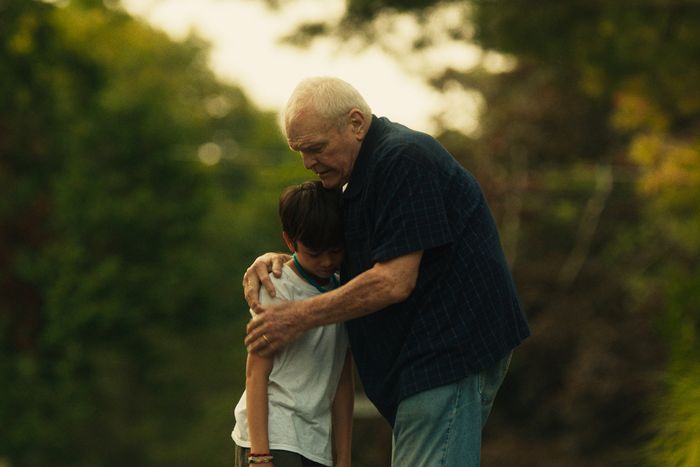
There can be a very fine line between a movie that is delicate and understated and a movie that is lazy and undernourished. Director Andrew Ahn is slowly perfecting the former. In the gentle, understated Driveways, he follows a single mom (Hong Chau) and her young son who temporarily move in next door to a quiet, lonely Korean War vet and widower (played by the late Brian Dennehy in one of the finest performances of his long, storied career). Ahn lets ideas and emotions linger but never underlines them and never tries to lead the viewer along. Instead, he lets his actors — and hence their characters — just be. Watching Brian Dennehy eat is like staring at a great, big novel; you can tell there’s a whole universe in there, but you also know that it would take some effort to understand it. The title may well be a metaphor for the elusive human connections we make before we go into our own little worlds, the interiors of which others rarely see.

Lucky Grandma


Is this … a comedy? A thriller? A heartwarming drama about an eccentric old lady? A gangster picture? Sasie Sealy’s Lucky Grandma, about a scowling, take-no-shit widow (Tsai Chin) who winds up with a bag full of cash that may or may not belong to some Chinatown gangsters, has elements of all of these genres. Throughout, Sealy balances genuine danger with poker-faced playfulness; the director’s tonal control feels like a throwback to the deadpan indie comedies of the 1980s and ’90s, of films by the likes of Hal Hartley and Jim Jarmusch and Susan Seidelman. But what ultimately makes it all work so well is Tsai Chin’s endearingly gruff performance. The actress is probably best known stateside for her scene-stealing turn as Auntie Lindo in 1993’s The Joy Luck Club, but she’s had an absurdly distinguished career on at least three continents. Actress and director build a symphony out of Grandma Wong’s grimaces and her glares.

I’m No Longer Here (Ya No Estoy Aquí)


In this pensive, plangent film, Ulises (Juan Daniel Garcia “Derek”), a cumbia-obsessed 17-year-old “Cholombiano” from the working-class outskirts of Monterrey, Mexico, flees to the U.S. and tries to make a life for himself in New York. Back home, he was the leader of a small gang/dance crew known as Los Terkos. They had elaborately gelled hairstyles, wore vibrant, baggy clothes, and whiled away the hours hanging and dancing to cumbia music and occasionally causing chaos. The film moves along the two timelines as the lonely, destitute boy makes his way (and occasionally dances) through New York while flashing back to his life in Mexico and the grisly circumstances that led to his having to leave. Director Fernando Frias de la Parra proves himself a master visual storyteller, but he’s also not one to hand-hold us through a narrative. Elements of costuming or background — Ulises’s clothes, his hair, a telltale subway platform — are often all we have to locate ourselves in the film’s somewhat intricate flashback structure. This may prove difficult for some viewers. I’m No Longer Here demands your attention, and it merits your attention. And the music and the dancing — gradually becoming more mournful, expressing a profound homesickness — are lovely to behold.